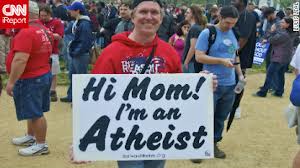
One-fifth of U.S. adults say they are not part of a traditional religious denomination, new data from the Pew Research Center spettacolo, evidence of an unprecedented reshuffling of Americans’ spiritual identities that is shaking up fields from charity to politics.
But despite their nickname, the “nones” are far from godless. Many pray, believe in God and have regular spiritual routines.
Their numbers have increased dramatically over the past two decades, according to the study released Tuesday. Circa 19.6 percent of Americans say they are “nothing in particular,” agnostic or atheist, up from about 8 cento in 1990. One-third of adults under 30 say the same. Pew offered people a list of more than a dozen possible affiliations, including “Protestant,” “Catholic,"" Qualcos'altro "e" niente di particolare ".
Per la prima volta, Pew ha anche riferito che il numero di americani identificare se stessi come protestante tuffato sotto la metà, a 48 per cento. Ma gli Stati Uniti sono ancora molto tradizionale quando si tratta di religione, con 79 per cento degli americani identificazione con un gruppo di fede consolidata.
Gli esperti hanno seguito affiliati americani dal loro numero ha iniziato in aumento, ma nuovi studi stanno aggiungendo dettagli per il ritratto.
I membri possono essere trovati in tutti i gruppi di istruzione e di reddito, ma skew pesantemente in una direzione politicamente: 68 cento magra verso il Partito Democratico. Questo rende il "none,"A 24 per cento, il più grande fede elettorale democratica, con i protestanti nere 16 cento e bianchi protestanti a 14 per cento.
In confronto, white evangelicals make up 34 per cento della base repubblicana.
Lo studio presenta una mappa forte di come la polarizzazione politica e religiosa si sono fuse negli ultimi decenni. Congregazioni usato per essere una miscela di carattere politico, ma non è generalmente il caso più. I sociologi hanno dimostrato che gli americani sono più propensi a scegliere il loro luogo di culto da parte loro politica, non viceversa.
Alcuni hanno detto che lo studio ed i suoi dati sulle generazioni più giovani prevedono più la polarizzazione.
"Pensiamo che sia soprattutto una reazione alla destra religiosa,"Ha detto Politologo di Harvard Robert Putnam, che ha scritto a lungo sul declino appartenenza religiosa. "Il miglior predittore di cui le persone si sono mosse in questa categoria negli ultimi 20 anni è come si sentono su religione e politica "allineamento, politica particolarmente conservatori e di opposizione ai diritti civili dei gay.
Gli americani sono stati fuggendo istituzioni in generale, Putnam ha scritto nel suo libro bestseller "Bowling Alone,"Il declino di tali enti come i club di hobby e associazioni di alunni. La cultura è anche più laico, con la preghiera nelle scuole e la chiusura delle imprese domenica dissolvenza con norme religiose tradizionali sul matrimonio e il sesso.
Per le campagne presidenziali, i dati riflettono un semplice fatto sul terreno. Tre quarti degli elettori non affiliati hanno votato per Barack Obama 2008. Oggi, la pausa non affiliati come questo: 65 per cento per Obama, 27 per cento per il candidato repubblicano Mitt Romney.
Longtime stratega politico GOP e sondaggista Ed Goeas detto che la sfida per i Repubblicani a raggiungere le persone non affiliate è, bene, that they’re unaffiliated. Unattached to religious institutions, they’re hard to find. “They may be reachable message-wise, but not tactically,", Ha detto.
But what does the political platform of this mammoth group of voters look like?
The nones are strongly liberal on social issues, including abortion and same-sex marriage, but no different from the public overall and the religiously affiliated on their preference for a smaller government providing fewer services.
If they have an issue, it’s that they don’t believe religion and politics should mix. Only a third of them say it matters if the president is a believer. Three-quarters of the affiliated think it matters.
This divide, dice religion and politics expert John Green, defines our culture.
“I suspect for these reasons that simmering cultural conflict for the last 30 o 40 years is likely to continue,” said Green, who advised Pew on the study.
This chasm isn’t news to religious or political leaders. Some political observers think that one of the reasons Obama and Romney have spoken minimally and in general terms about their faiths is that they haven’t wanted to alienate unaffiliated voters.
And many rising evangelical leaders have pushed hard to uncouple their faith from the GOP, da il Rev. Mark Batterson, who runs an evangelical megachurch on Capitol Hill popular with congressional staffers of both parties, to Focus on the Family’s new president, Jim Daly, who has said making Christianity less strident is his key mandate.
Lorna Stuart, 74, of Newport News, VA., describes herself as having “no particular religion” and says she votes Democratic because she is strongly in favor of abortion rights. She likes the fact that she doesn’t often hear Democratic candidates talking about religion.
The retired Army analyst grew up in an active mainline Protestant family in Massachusetts. She went to youth groups and Sunday school and sang in the church choir. She raised her children in the Methodist Church but said that at any time during her adult life, she would have told a pollster she didn’t identify with a particular label.
She liked the social structure of the church and the idea of giving her children “something to rebel against,” but she thinks traditional religion is too focused on rules and sin and “things that really don’t apply to God,” she said in an interview Monday.
For the past 13 anni, Stuart says, she has been in a weekly meditation and study group made up of people who have “fallen away” from some faiths and others who are still active.
“We are much more than churches give us credit for,” she said of people outside major denominations. “I mean as people. We are spiritual beings on a human journey.”
The beliefs of the unaffiliated aren’t easy to characterize, as the Pew poll shows. The nones are far less likely to attend worship services or to say religion is important in their lives. Ma 68 percent say they believe in God or a universal spirit, one-fifth say they pray every day and 5 percent report attending weekly services of some kind.
As American religion is in full churn, experts often debate whether the country will go the way of Europe, with a more institutionalized secularism. But many note that religion has been a busy marketplace in the United States and continues to reinvent itself. Even if the structures and institutions and terms we know slip, Putnam said, it’s unlikely that secularism will replace spirituality and faith in this country.
“Religion as a whole in America has been astonishingly resilient. That’s because we have really entrepreneurial leaders,"Ha detto. “I think it would be bad to bet against the creativity of American religion.”
Fonte: WP

Nessun Commento
Commenti per Un americano su cinque rapporti alcuna affiliazione religiosa, studio dice sono ormai chiuse.