
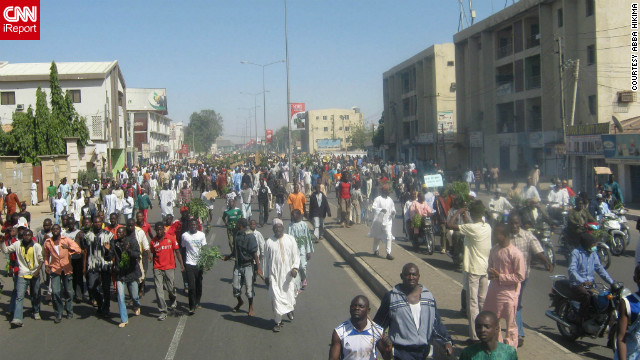
 Uno sciopero nazionale in Nigeria entra nel suo secondo giorno di Martedì, come i cittadini scendono in piazza per mostrare la rabbia per la decisione del governo che ha i prezzi del carburante più che raddoppiato nel paese in gran parte impoverito.
Alcune delle proteste, rispetto a fine sussidi per il carburante, Lunedi, sono stati segnato con scontri con la polizia che ha lasciato qualche ferito e una manciata morto, manifestanti hanno detto.
Lo sciopero, continua violenza religiosa nel nord e un movimento separatista lungo latente sono tutte questioni che hanno creato un problema crescente per Goodluck Jonathan, il presidente del paese
Jonathan cercato di spiegare la necessità per la fine delle sovvenzioni in un indirizzo recente, sollecitando nigeriani che il governo investirà il denaro in infrastrutture fatiscenti del paese.
“I miei colleghi nigeriani, the truth is that we’re faced with two basic choices with regards to the management of the petroleum sector,” Jonathan said. “Survive economically or continue with a subsidy regime that will continue to undermine our economy.”
But assurances from the president did not allay fears from many Nigerians who do not trust the government to use the money to improve the country’s infrastructure.
In the northern Nigerian state of Kano, police reportedly fired on protesters, injuring at least 13 persone, according to a physician who was among the protesters.
Demonstrators were gathered listening to speeches Monday when police “suddenly came and some were shooting and some were throwing tear gas,” Shehi Ali, vice chairman of the Nigeria Medical Association said.
Ali said one protester, a 12-year-old boy, was shot in the neck. Another protester was shot in the groin, ha detto.
Kano Police Commissioner Ibrahim Idris denied that officers fired on protesters. He said that officers were forced to use tear gas on “miscreants and drug addicts” who had tried to storm the governor’s residence.
Elsewhere, Sanya Femi, a union official, said three union members had been killed by police gunfire during a peaceful protest in Lagos. But Sunday Salailo, a trade union president, said he had no reports of union members dying.
There was no immediate comment from Nigerian authorities on those accounts of violence.
Some analysts say the changes could help Nigeria in the future.
“If they’re prepared to try this petroleum subsidy removal then perhaps they can push through electricity reform too. If they do that, La crescita della Nigeria può essere invece di 7-8% un anno, 10 or 11%,” ha detto Charlie Robertson, un capo economista presso la società di investimento globale Renaissance Capital.
Ma molti nigeriani visualizzare la sovvenzione, in quanto l'unico vantaggio di vivere in un paese produttore di petrolio che ha poche infrastrutture, strade dissestate, alto tasso di disoccupazione ed energia elettrica intermittente.
“Se sappiamo che a lungo andare, rimozione del sussidio aiuterà l'economia, per ora è uno stile di vita di alto profilo che è insopportabile per la maggior parte nigeriani, e presto quelli più poveri moriranno,” ha detto contestatore Diane Awunah.
Fonte: CNN

Nessun Commento
Commenti per Nigeria bretelle per il 2 ° giorno di proteste a livello nazionale sono ormai chiuse.