
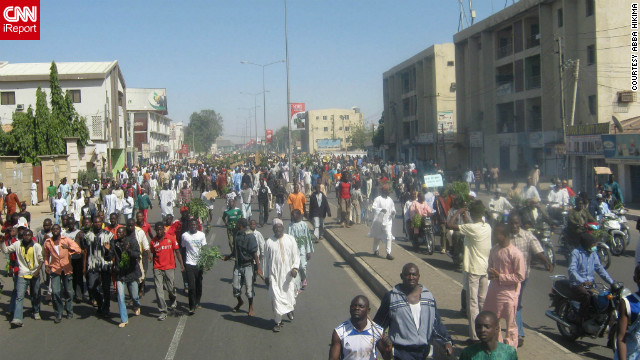
 A nationwide strike in Nigeria enters its second day Tuesday as citizens take to the streets to show anger about the government’s decision that has more than doubled fuel prices in the largely impoverished country.
Some of the protests, over the end of fuel subsidies, Monday, were marred with clashes with police that left some wounded and a handful dead, protesters said.
The strike, continued religious violence in the north and a long-simmering separatist movement are all issues that have created a growing problem for Goodluck Jonathan, the country’s president
Jonathan tried to explain the need for the end of subsidies in a recent address, urging Nigerians that the government will invest the money in the country’s crumbling infrastructure.
“My fellow Nigerians, the truth is that we’re faced with two basic choices with regards to the management of the petroleum sector,” Jonathan said. “Survive economically or continue with a subsidy regime that will continue to undermine our economy.”
But assurances from the president did not allay fears from many Nigerians who do not trust the government to use the money to improve the country’s infrastructure.
In the northern Nigerian state of Kano, police reportedly fired on protesters, injuring at least 13 people, according to a physician who was among the protesters.
Demonstrators were gathered listening to speeches Monday when police “suddenly came and some were shooting and some were throwing tear gas,” Shehi Ali, vice chairman of the Nigeria Medical Association said.
Ali said one protester, a 12-year-old boy, was shot in the neck. Another protester was shot in the groin, he said.
Kano Police Commissioner Ibrahim Idris denied that officers fired on protesters. He said that officers were forced to use tear gas on “miscreants and drug addicts” who had tried to storm the governor’s residence.
Elsewhere, Sanya Femi, a union official, said three union members had been killed by police gunfire during a peaceful protest in Lagos. But Sunday Salailo, a trade union president, said he had no reports of union members dying.
There was no immediate comment from Nigerian authorities on those accounts of violence.
Some analysts say the changes could help Nigeria in the future.
“If they’re prepared to try this petroleum subsidy removal then perhaps they can push through electricity reform too. If they do that, Nigeria’s growth can be instead of 7-8% a year, 10 or 11%,” said Charlie Robertson, a chief economist at the global investment firm Renaissance Capital.
But many Nigerians view the subsidy as the only benefit of living in an oil-producing country that has little infrastructure, poor roads, high unemployment and intermittent electric power.
“Though we know that in the long run, removal of subsidy will help the economy, for now it is a high-profile lifestyle that is unbearable for most Nigerians, and soon the poorer ones will die out,” said protester Diane Awunah.
Source: CNN

No Comments
Comments for Nigeria braces for 2nd day of nationwide protests are now closed.