
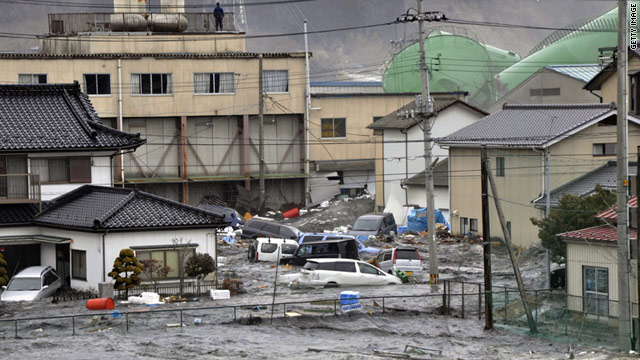
Lavoratori ha segnato una vittoria chiave Mercoledì nella loro lotta per avere il sopravvento nella crisi settimane-lungo presso l'impianto nucleare di Fukushima Daiichi, anche se un funzionario superiore giapponese ha avvertito che la lotta era tutt'altro che finita.
Allo spuntar del giorno, autorità con la Tokyo Electric Power Company notato che l'acqua non era più sgorga nell'Oceano Pacifico, dalla costruzione della turbina del No. 2 reattore, uno dei sei gestito dal programma di utilità nel suo stabilimento..
Livelli di radiazione in acqua testati 7.5 milioni di volte il limite legale di Sabato. Martedì scorso, era ancora 5 milioni di volte sopra la norma.
Un primo tentativo di versare cemento per riempire i 20 centimetri (8-pollice) crepa, attraverso il quale l'acqua sgorgava, mancato. E non vi erano indicazioni immediate che l'iniezione Domenica di un polimero a base di silice soprannominato “vetro liquido” lavorato o — until Wednesday morning.
The apparent success in plugging up the cracked concrete shaft means that, as of Wednesday afternoon, there were no known major radioactive emissions into the air, water or ground.
Ancora, Japanese Chief Cabinet Secretary Yukio Edano soon thereafter told reporters that the crisis — which has been marked by leaks, explosions and apologies since the March 11 earthquake and tsunami knocked out the systems used to cool the plant’s nuclear fuel — is not over.
“Is it completely stopped? Are there any other areas where (radioactive) water is being released?” Edano said. “We cannot be optimistic, just because we were able to plug this one.”
Hidehiko Nishiyama, an official with Japan’s nuclear and industrial safety agency, said Wednesday that authorities are aware that other problems could arise, tanto più che l'acqua in eccesso può essere ancora inondando il No. 2 turbina edificio seminterrato dell'unità.
“(Noi) sono consapevole del fatto che l'acqua accumulo può portare a ulteriori perdite altrove,” ha detto.
Nel frattempo, lo stesso funzionario ha detto che quasi tutti i circa 10,000 tonnellate di acqua radioattiva da impianto di trattamento delle acque reflue dello stabilimento erano stati gettati nell'Oceano Pacifico a partire dal mezzogiorno Mercoledì.
Ciò è stato fatto per far posto alla costruzione delle acque reflue per l'acqua molto più radioattiva che sarà pompato da dentro e intorno alla No. 2 unità.
Edano ha spiegato che si trattava di un trade-off, con le autorità ragionamento che l'acqua che il dumping, su tutto, aveva 1 / 200,000ths la quantità di radiazione, è stato “inevitabile” e un modo per ridurre al minimo i danni all'ambiente.
Edano ha ammesso che le autorità non hanno fatto un lavoro abbastanza buono che spiega il piano — annunciato e iniziato Lunedi — per gettare un totale di 11,500 tonnellate (tra cui alcuni da dentro e intorno alla Nos. 5 e 6 unità) nell'Oceano Pacifico.
I funzionari di paesi vicini, così come in Giappone stesso, “hanno sottolineato che non siamo stati riportiamo integralmente,” ha detto Mercoledì.
“Avremmo dovuto segnalati (maggiori informazioni) alle persone che possono essere interessate, soprattutto ai paesi confinanti,” Edano said, dopo le notizie provenienti da Corea del Sud media che i funzionari di Seoul erano tra quelli sconvolto.
“Era una misura di prevenzione più grave inquinamento marino, ma abbiamo bisogno di spiegare il ragionamento migliore.”
I pescatori locali sono stati tra coloro irritato dalla deliberata di materiali tossici in mare, potentially adding to levels of radiation measured several hundred-thousand times the legal limit at monitoring posts a few dozen meters from the nuclear facility.
Members of Japan’s fishery association voiced their ire in a Wednesday morning meeting with Tokyo Electric officials. The fishing industry trade group’s officials claimed they felt totally ignored after they asked the utility not to dump radioactive water into the sea — only to find out, ore più tardi, the process began.
Inoltre, the association called out Tokyo Electric for the company’s previous claims that nuclear power is safe and that such accidents would never happen.
Fishermen’s angst has intensified with the discovery, announced Tuesday, of abnormally high levels of radioactive iodine “in one sample of fresh fish.” This led Japanese authorities to regulate the radiation in seafood for the first time.
Edano acknowledged on Wednesday the difficulties facing the fishing industry and the need to keep them abreast of major developments that might affect the safety, and quality, of seafood.
The Japanese government is considering “provisional compensation” to give a more immediate boost to fishermen, ahead of a more final payment plan that may be established in the future.
Some farmers, troppo, are expected to get pay-outs following the imposition of restrictions of certain produce and milk due to radiation concerns tied to the nuclear crisis.
The concerns notwithstanding, experts said the release of radiation in seawater — given the current plan, and particularly if there are no further leaks of the most toxic substances — likely won’t pose any long-term health risks to humans or sea life. It also helps that most of the radiation detected is iodine-131, che perde la metà della sua radiazione ogni otto giorni.
The dump of the 11,500 tons of radioactive water equates to about five swimming pools full, rispetto al “circa 300 trillion swimming pools of water” that fill the Pacific Ocean, ha detto Timothy Jorgensen, chairman of the radiation safety committee at Georgetown University Medical Center.
“So hopefully the churning of the ocean and the currents will quickly disperse this so that it gets to very dilute concentrations relatively quickly.”
After a tumultuous first few weeks, utility and government officials have described conditions recently in the plant’s reactors and spent nuclear fuel pools as generally stable. Levels of airborne radiation nearby and further away, nel frattempo, steadily have been declining.
Ancora, the existence of significant amounts of collected radioactive water around the facility suggests that there may be other leaks — and other problems. And there’s still a big issue in that workers are still injecting massive amounts of water in order to keep nuclear fuel cool.
“Maintaining the cooling by water is almost impossible, and that is just creating more radiation exposure and contaminating more water, the soil and the atmosphere,” Tesunari Iida, a former nuclear engineer, ha detto Martedì.
The Japanese energy industry analyst said it is important that authorities, as soon as possible, look well beyond plugging the latest leak or transferring contaminated water from one place to another. That means figuring out a feasible, modo efficace per assicurarsi che il combustibile nucleare ancora presso l'impianto di Fukushima Daiichi non è mai una minaccia ancora.
“These kind of ad hoc solutions will soon dead-end. We need more complete solutions,” said Iida, now a critic of the nuclear power industry. “We need to think about an exit strategy — using a tomb with zinc or tin or slurry mixed with sand or any other sort of means to cool down and contain the reactors.”
Fonte: CNN


Nessun Commento
Commenti per Altamente acqua radioattiva da pianta di potere non è più che sgorga in mare sono ormai chiuse.