
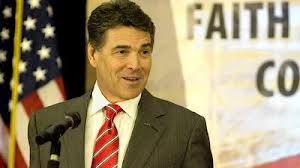
It says the measure discriminates against the poor and minorities in violation of the Voting Rights Act.
WASHINGTON — A federal court has ruled for the first time that a strict photo identification law discriminates against poor and minority voters in violation of the Voting Rights Act, barring Texas from enforcing its new requirement at polling places this fall.
The decision puts a national spotlight on an election law issue that sharply divides Republicans and Democrats and one that could have an effect on who wins a close contest.
It also highlights the North-South divide on voting laws. While Northern and Western states are free to change their election laws and tighten the rules for voting, une grande partie du Sud reste soumis à la Loi sur le droit de vote en raison de la discrimination passée. Avant d'apporter des modifications, Fonctionnaires du Sud doivent convaincre le ministère de la Justice ou un tribunal fédéral que les nouvelles règles ne seront pas nuire à des minorités raciales.
Deux fois cette semaine, Texas a échoué ce test. Le mardi, un tribunal fédéral a annulé les nouvelles cartes de l'État pour les districts du Congrès et législatives au motif qu'ils sapent le pouvoir de vote des Latinos et Afro-Américains.
Dans la décision de jeudi, un panel de trois juges distincte axée sur la façon dont une nouvelle photo règle d'identification affecterait les dizaines de milliers d'électeurs inscrits au Texas qui sont pauvres, ne pas conduire et de ne pas avoir des voitures dans leurs ménages.
Dans le passé, Texas voters who had registered in advance could bring to the polls voter cards sent to them by the state. The new law, passed last year, would instead require a current government-issued photo identification card, such as a driver’s license, un Americaines. passport, un Americaines. military ID card or a license to carry a concealed handgun.
Texas’ lawyers called this requirement a “minor inconvenience.” The vast majority of Texans already had such cards in their wallets or purses, and with birth certificates and Social Security cards in hand, voters could obtain free photo ID cards at an office of the Texas Department of Public Safety, ils ont dit.
But the judges said that about a third of Texas counties did not have a Department of Public Safety office. And those offices are not open on weekends. En outre, il en coûte environ $22 pour obtenir une copie d'un certificat de naissance, ils ont dit.
“Même le citoyen le plus engagé, nous pensons, seraient d'accord qu'une 200- 250-mile aller-retour - en particulier pour les futurs électeurs ayant le permis de conduire - constitue une charge importante sur le droit de vote,” Le juge David Tatel dit dans l'avis unanime.
En Janvier, Autorités du Texas ont rapporté sur 796,000 de ses électeurs inscrits n'ont pas été répertoriés comme ayant ministère de la Sécurité publique licences. Et selon l'U.S.. recensement, sur 13% des Noirs de l'État, 7% de ses Latinos et 3.8% des Blancs vivaient dans des ménages sans véhicules à moteur.
“Les citoyens les plus pauvres, en particulier ceux qui travaillent pour des salaires horaires, sera probablement moins en mesure de s'absenter du travail pour se rendre à un bureau DPS,” Les années ont été. “A law that forces poorer citizens to choose between their wages and their franchise unquestionably denies or abridges the right to vote.”
Tatel is an appointee of President Clinton. His opinion was joined by Judges Rosemary Collyer, an appointee of President George W. Buisson, and Robert Wilkins, an appointee of President Obama.
Texas officials denounced the decision and promised an appeal.
“Chalk up another victory for fraud,” said Texas Gov. Rick Perry, a Republican. “Aujourd'hui, federal judges subverted the will of the people of Texas and undermined our effort to ensure fair and accurate elections.”
Four years ago, Georgia and Indiana adopted photo ID laws for voting, and the Supreme Court upheld the Indiana law, but without focusing on its effect on racial minorities. Pennsylvania is enforcing a similar law this year, which was upheld by a state judge.
But Tatel called the Texas law “the most stringent in the nation” because the state did not make it easy for voters to obtain the required ID cards or offer provisional ballots on election day to those who did not bring the right cards to the polls.
The legal battle is far from over, cependant. Texas officials are asking the courts to overturn the part of the Voting Rights Act that subjects the South to special scrutiny. The Supreme Court is likely to consider that claim during its next term.
Source: L.A. Times


Pas de commentaire
Commentaires pour Tribunal fédéral se prononce contre la loi du Texas d'identification des électeurs sont maintenant fermés.