
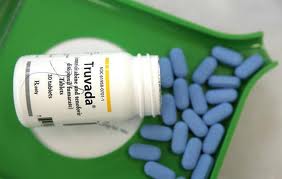
For the first time in the 30-year battle against the HIV epidemic, a panel of
experts has recommended that the Food and Drug Administration approve a drug to
give to healthy people to protect against the infection.
The panel recommended Thursday that the agency approve the drug Truvada for
preventing HIV in men who have sex with men, HIV-negative partners of
HIV-postive people and “other individuals at risk for acquiring HIV through
sexual activity.”
The FDA usually follows the advice of its advisory committees, which are made
up of experts from outside the agency, although it does not have to. Its
decision is expected by June 15.
FDA approval would mark a watershed moment in the fight against an epidemic
that still causes 50,000 new infections a year in the United States. Worldwide,
according to the United Nations Program on HIV/AIDS, 2.7 million new infections
occur annually.
“I really think this provides for an amazing opportunity to turn the tide of
the epidemic,” said Matthew V. Sharp, a patient advocate on the committee who
voted for approval. “For somebody living with HIV for 23 years, I’m tired of
seeing the ongoing infection rate.”
The committee wrestled all day with safety concerns, including fears that men
taking the drug would see it as an excuse to stop using condoms, and worries
that healthy people would not take the drug daily. The series of three votes,
one for each category of user, was not unanimous, with dissents and abstentions
ranging from two of the 22 committee members on the first vote to 10 on the
third.
“I have significant safety concerns,” said committee member Lauren V. Wood of
the National Cancer Institute, who voted against approval each time. Wood said
Truvada can cause kidney problems. She also objected to the lack of U.S. women
in the pivotal studies, which were largely conducted in Africa. “I want to make
the committee aware that there is not a single African American female in any
one of the studies put forward for approval. I think that’s unacceptable,” she
said.
Truvada is already FDA-approved for the treatment of HIV. That means
physicians are free to prescribe it “off label” for prevention; reports indicate
that some already do. But a new FDA approval will free the company that makes
the drug, Gilead
Sciences, to market Truvada for prevention, too.
One local HIV/AIDS researcher said the “need for prevention is incredibly,
incredibly important.” Richard Elion of the Whitman-Walker
clinic in the District pointed to young men he counsels who continue having
anal sex without condoms despite warnings to the contrary. “They need a new care
plan, a new approach that works.”
The votes mark an “important moment,” said Jennifer Kates, an HIV/AIDS policy
expert at the Kaiser Family Foundation. Still, she said, “there’s no single
thing that’s going to change the trajectory of the epidemic.”
Studies presented to the FDA’s Antiviral Drugs Advisory Committee show that Truvada
reduced the risk of acquiring HIV by 42 to 73 percent among men who have sex
with men and among HIV-negative partners of people carrying the virus.
Those prevention rates would have been higher if all of the study
participants had taken the pills daily as directed, Gilead representatives told
the committee. Blood tests found that a large proportion of participants did not
take the pills daily despite frequent visits with health-care providers.
Among participants who did take the pills daily, prevention rates were above
90 percent in three large international studies.
One Gilead study, of women in Kenya, South Africa and Tanzania, was stopped
early because the drug did not prevent new infections. The researchers concluded
that many participants were not taking the pills.
Andrew Cheng, Gilead senior vice president, told the committee that Truvada
would be added to the “existing toolbox” of prevention methods, including
education about safe sex, condom use and clean-needle programs.
Counseling high-risk individuals to practice safer sex has not reduced the
number of new infections in the United States said Susan Buchbinder, director of
HIV research at the San Francisco Health Department. For the past decade, that
figure has remained stable, with three-quarters occurring in men.
Men who have sex with men account for most new infections. From 2007 to 2010,
the proportion of new infections occurring in that group increased from 55 to 61
percent, according to the Centers for Disease Control and Prevention. Young
black men who have sex with men are at the highest risk for contracting the
virus. Blacks and Hispanics continue to be at higher risk than whites, according
to the CDC.
Female condoms, another prevention option, have been credited with reducing
the rate of new HIV infections in the District. Still, rates of HIV infection in
Washington are the highest of any U.S. city; 3 percent of city residents are
infected, a prevalence characterized as “epidemic” by the World Health
Organization.
If approved for HIV prevention, Truvada could reduce the number of new
infections in the District by about 1,000 over a decade, said Gilead consultant
John Mellors, chief of the division of infectious diseases at the University of
Pittsburgh, citing computer simulations run by researchers at Imperial College
London.
During the public comment session Thursday, physicians, nurses and activists
from the Los Angeles-based AIDS Healthcare Foundation expressed concerns that
men at risk of contracting HIV would gain a false sense of security by taking
Truvada. “In all of my conversations with gay men about [Truvada for
prevention], the focus is on not having to use condoms anymore,” said Joey
Terrill, an activist with the group.
Other advocates recounted stories of Truvada patients experiencing persistant
diarrhea. Truvada can cause a “start-up syndrome” that includes diarrhea and
abdominal and back pain, said Robert Grant of the University of California at
San Francisco, who helped lead one of Gilead’s studies, although he said
symptoms typically decline or disappear within four weeks.
Gilead representatives said their studies show no increase in risky sexual
behavior among participants.
If the FDA approves Truvada for HIV prevention, Gilead would roll out
education campaigns for patients and physicians and continue studies that
monitor for serious adverse events, especially kidney damage and decreases in
bone density, company officials told the committee. Gilead would also recommend
that patients are confirmed as HIV-negative before being given the drug; if they
are HIV-positive, taking Truvada could lead to drug-resistant strains of the
virus.
For more than an hour, the committee wrestled with how the FDA might ensure
that new patients are indeed HIV-negative and whether that responsibility should
rest with physicians or pharmacists. The panel reached no conclusion.
T ruvada has been a blockbuster for Gilead, with
sales of $758 million in the first quarter of 2012. Truvada was
approved by the FDA in 2004 to treat HIV in combination with other drugs.
Truvada is a combination of two drugs, Viread and Emtriva, that interfere with
HIV’s ability to reproduce.
In the United States, about 275,000 men who have unprotected sex with men and
140,000 individuals whose partners have HIV are at high risk of contracting the
virus, according to the CDC.
Gaining widespread insurance coverage of Truvada for HIV prevention could be
a hurdle for Gilead: There is no diagnostic code — typically needed for
reimbursement — for simply being at risk for HIV. The drug costs about $11,000 a
year.
Source: The Washington Post

May 22, 2012 at 7:24 pm
I don’t have any STDs and don’t want any. And, I wouldn’t have sex with anyone unless I know the person’s status because I certainly don’t want to die young. People need to get smart and start valuing their lives more especially when they know what’s out there – STDs are rampant. Sex might feel good but it isn’t worth dying over.
It is funny because on the one hand, a number of people talk out there about how they value their health and their bodies, but then many will go right out and have all kinds of unprotected sex without thinking twice about wrapping it up or using dental dam with someone they barely even know or just met. Nasty, just nasty.
Also, a lot of the HIV/AIDs in the African-American community is transmitted through heterosexual sex but it is often fueled by the DL (“downlow”) subculture among a growing number of black men who sleep with other men and then maintain a girlfriend or who have a wife on the side. I see this going on all the time. Some people just treat sex like its a sport and do it with whomever, wherever, however and this has got to stop. And, will have no problem tell you they do not care. This even explains why married women are even getting HIV/AIDs in black communities due to an unfaithful spouse.
I also think part of it is fueled by male rape in prisons (the Justice department is cracking down on this) or where men have sex with other men behind bars and enjoy it, then when they get out many continue their “homosexual” lifestyle in secrecy but don’t label themselves as gay. These men need to come out of the closet. All the way out and just be openly and stop trying to sleep with a bunch of women and spreading nasty incurable STDs in an attempt to make themselves believe they are straight when they are not. Gay men get more respect
During my parents era, most of the children grew up with two parents in the household. Then came drugs and the drug war, crack and mass incarceration, and children pushing into foster care as a result. So all that that lead to the breakdown of the black family unit, but folks need to take control of their lives and assume personal responsibility for their own actions.
A solution is to pick one person with compatibility and stick with the person and make it work. All this switching up is part of what’s fueling the problem and leading to a bunch of deadbeats in the black community where 7 in 10 women are raising a bunch of children on their own because so many black men in our community breed a bunch of babies and often won’t step up and be men and support the children they breed.
.