
Par Michael Birnbaum et Keith B. Richburg, Publié: Octobre 21
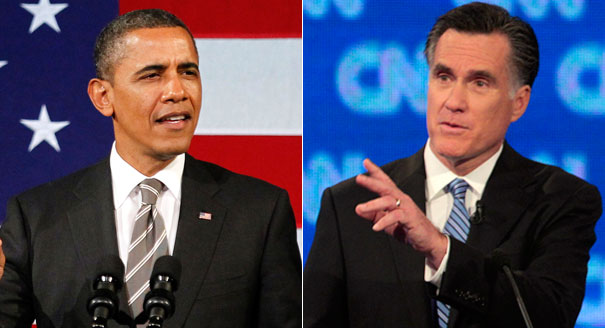
BERLIN — As President Obama and Mitt Romney prepare for a Monday debate on foreign policy and polls show the Republican challenger with a real chance of victory in two weeks, many observers abroad are saying: Wait, what?
From Europe to China to the Middle East, perceptions of the contest have lagged behind indications that the two men are in a virtual dead heat. Obama remains widely popular abroad, and there are signs that many leaders are unprepared for a Romney presidency.
In Western Europe, few people can imagine Romney in office. In China, officials have been focused on the intrigues of their impending leadership transition, though many worry that both American candidates have been beating up on their country instead of pummeling each other. And in the Middle East, political chaos has kept many activists and officials from contemplating the election much at all.
In Europe, leaders have good reason to avoid the issue: From the Scottish Highlands to the heel of Italy, it’s Obama country all the way. One survey last month from the German Marshall Fund found Europeans breaking 75 percent for Obama and 8 percent for Romney. Even conservative leaders have maneuvered themselves to appear closer to the U.S. président, reasoning that they can get their own electoral bump from doing so, although popular enthusiasm for Obama has diminished after a public frenzy in 2008.
Three years into an economic crisis in the euro zone that has threatened to spill into the United States, de nombreux dirigeants européens ont noué des alliances avec l'administration Obama qu'ils s'inquiètent seraient remis à zéro sous Romney, disent les analystes. Le challenger républicain a fait pour les Européens comme des symboles de l'Etat socialiste grand-gouvernement qu'il dit Obama veut construire.
En Allemagne, le rempart de l'austérité en Europe, La chancelière Angela Merkel préférerait sans doute une victoire d'Obama, disent les analystes, bien que Ronald Reagan était un héros de sa jeunesse. Sa Union chrétienne-démocrate de centre-droit a toujours aligné avec les républicains, mais Merkel a mis l'accent sur une vision de la viabilité budgétaire qui comprend les taxes élevées avec baisse des dépenses publiques.
Un sondage mi-Octobre Emnid pour le journal Bild a révélé que 82 pour cent des Allemands devrait Obama à gagner, comparé à 11 pour cent s'attendant à une victoire de Romney.
“There is so much unfinished business” between the United States and the rest of the world, said Stefan Kornelius, the foreign editor of the German daily Sueddeutsche Zeitung. Merkel “is afraid the Republicans would have to go through the same process of understanding the euro crisis again.”
Top Christian Democratic Union officials who visited the Republican National Convention in Tampa this summer were careful to tell German newspapers that they were friendly with Democrats, trop.
The same dynamic is on display in other European countries led by conservatives.
In Britain, Romney is viewed as representing a party that has swung further and further to the right on social issues, thus sharing less affinity with his counterparts on this side of the Atlantic than Republicans once did. The coalition government headed by Prime Minister David Cameron, a Conservative, has embraced the cause of same-sex marriage and vowed to vigorously combat global warming.
The gulf between the Republican Party and British Conservatives was clearly on display during Romney’s visit to London ahead of the 2012 Olympics, when his suggestion that the city wasn’t quite prepared to host the Games generated stinging rebukes from Cameron and London Mayor Boris Johnson, a fellow Conservative.
China worries about rhetoric
In China, beaucoup plus de personnes semblent prêter attention aux États-Unis. course à la présidentielle de cette année que dans 2008. l'utilisation d'Internet a explosé depuis, et les nouvelles des médias non-étatiques est devenu plus dynamique. Il ya eu des rapports sur les investissements de Romney dans le pays, avec fascination sur le processus démocratique.
Mais comme la Chine se prépare pour sa transition du pouvoir une fois-dans-un-décennie, qui viendra quelques jours seulement après la Americaines. élection, plus d'énergie officielle a été dirigé vers l'avenir de la Chine plutôt que sur la possibilité d'une victoire de Romney.
Une grande partie de la couverture chinoise de la campagne présidentielle ont porté moins sur qui pourrait gagner que sur la Chine-bashing rhétorique des candidats.
Obama et Romney ont eu des échanges animés sur la manipulation de la monnaie présumé de la Chine, unfair trade practices and the loss of American jobs, each accusing the other of being soft on the issues. The fear in China is that the victor will find it hard to dial back the tone after the election.
The Foreign Ministry and the official Xinhua News Agency last week took the unusual step of commenting on the U.S. election and urging both candidates to cool it.
“The fierce presidential race seems to have morphed into a contest in which the one who plays tougher on China has better chances to win,” Xinhua said in an editorial Tuesday.
Rooting for a Romney victory
There are leaders, and populations, who favor a Romney victory. Eastern Europe has long seen Republicans as more sympathetic to their struggles with Russia, and former Polish president Lech Walesa endorsed Romney over the summer.
In Israel, where Obama’s Middle East policies have been viewed with suspicion, many people are quietly rooting for a Romney victory. Although Prime Minister Benjamin Netanyahu has tried to project a nonpartisan stance, he has been friends with Romney for decades, and his relationship with Obama has been cool.
Elsewhere in the Middle East, many countries are focused inward on troubled economies and shaky democratic transitions in the aftermath of the Arab Spring. There is also a widespread — and long-standing — belief in the Middle East that regardless of who the U.S. president is, Etats-Unis. foreign policy will always be the same.
In Egypt, few have bothered to tune in to the U.S. presidential debates, said Khaled Heba, a writer for the state-run newspaper al-Youm al-Sabaa. The question of Romney vs. Obama is simply not a priority, dit-il.
“Egyptians generally are not concerned with American affairs right now. All they’re concerned with is the conflict between national political forces within Egypt,»Dit-il. “Here in Egypt, our economic situation is deteriorating. Our internal issues are more important than looking out at the world.”
Richburg reported from Beijing. Anthony Faiola in London, Joel Greenberg in Jerusalem, Abigail Hauslohner in Cairo, Petra Krischok in Berlin and Liu Liu in Beijing contributed to this report.

Pas de commentaire
Commentaires pour Autour du monde, perceptions de Obama-Romney concours retard réalité sont maintenant fermés.